Skip to the main content.

2 min read

Why ABV Testing Methods Fail at Low Alcohol Levels

Why ABV Testing Methods Fail at Low Alcohol Levels


Brewer_Inspecting_Beer_Quality_Blog


When brewers start working with low or no alcohol products, one thing often catches them out.

Methods that work well at typical beer strength can start giving odd or inconsistent results once alcohol levels drop below about 0.5 percent ABV.

Nothing has broken.
Nothing has stopped working.

What has changed is the measurement.

At higher alcohol levels, there is plenty of tolerance. Small inaccuracies rarely matter. At low alcohol levels, that margin disappears very quickly.

Methods that were previously consistent can start to move around.

Why higher alcohol levels are easier to measure


At typical beer strength, alcohol is relatively easy to measure.

The signal is strong.
There is room for error.
Small variations do not change the result in a meaningful way.

Most traditional ABV methods are being used well within their comfortable range. At around five percent ABV, they are measuring something that is easy to see and easy to quantify.

Being a few hundredths of a percent out rarely matters. The result still makes sense, and it still lines up with expectations.

What changes at low alcohol levels


Brewer_Testing_ABV_Levels_Blog


Once alcohol levels drop into the low and no alcohol range, the margin disappears.

The ethanol signal is much smaller.
There is far less room for error.

At five percent ABV, being a few hundredths out rarely matters. At 0.5 percent, that same difference makes up a noticeable part of the measurement.

This is usually where variation in the results becomes more obvious, even though the method itself has not changed.

Calibration ranges often do not extend far enough down to remain reliable. As a result, measurements are being made close to the edge of the method’s range.

These issues are not new. They are simply much harder to ignore at low alcohol levels.

Low alcohol is a different measurement problem altogether


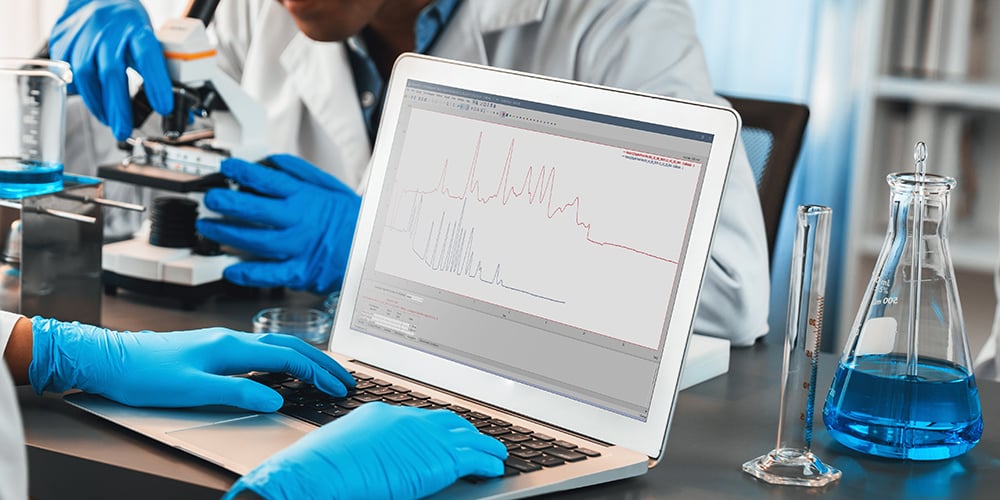
Ellution_Overlay_Data_Processing_Blog


Low alcohol products are not just lower strength versions of full-strength beer.

At these levels, the same methods are being used much closer to their limits, with very little margin left. What feels like routine measurement at typical beer strength becomes far more sensitive to small effects.

Nothing has failed. The conditions have changed.

A closer look at what changes at low ABV


The video below walks through this shift in more detail.

It shows why methods that behave well at typical beer strength start to behave differently once alcohol levels fall into the low and no alcohol range, and why small differences begin to matter much more.

If you are seeing variation in low-level ABV results and are unsure why, this explains what is happening and where those limits come from.

Methods that remain consistent at low alcohol levels


When alcohol levels are very low, methods that measure ethanol directly tend to behave more predictably.

Instead of relying on bulk properties of the sample, ethanol is separated from everything else and measured on its own. This becomes important once the margin for error has gone.

Gas chromatography works this way.

Because ethanol is separated before measurement, it remains clearly visible at low concentrations. Calibration can be set around the range being measured, and small changes are easier to see and repeat.

Related application notes


Different product types place slightly different demands on ABV measurement, particularly at low alcohol levels.

These application notes look at ABV testing in specific products and focus on areas that tend to change as alcohol levels fall, such as calibration range, sensitivity, and repeatability.


Each application note looks at the measurement in its own context, rather than treating low alcohol products as a simple extension of full-strength beer or cider.

Final Thoughts


Low and no alcohol products push ABV measurement into a much narrower range.

Once that margin has gone, it becomes clearer why methods that work well at typical beer strength can start to behave differently at very low alcohol levels.

If you want to look at this in more detail, the Brewery GC Buyers Guide brings together the different approaches used for ABV measurement in breweries and explains where they tend to be applied.

Understanding how measurement behaviour changes at low ABV is the first step in choosing an approach that fits your process.


Alcohol-Free Beer and Cider: Why Accurate Testing Matters and How to Get It Right

Alcohol-Free Beer and Cider: Why Accurate Testing Matters and How to Get It Right

When you brew beer or cider, you’re not just creating flavour, you’re also producing ethanol. And if your label says “alcohol-free,” even a tiny...
Read More
How does GC work in Alcohol testing

How does GC work in Alcohol testing

When you brew beer or cider, you’re not just creating flavour you’re producing ethanol. But how do you know if the ABV on your label is actually...
Read More