Ensuring Quality Control: Testing in Beer Production
Discover the essential role of testing in beer production and how it ensures quality control throughout the process. Testing plays a crucial role in...
If you are making beer or cider, you are making ethanol.
The real question is how much.
The amount of alcohol in your beer or cider affects how it tastes, how consistent it is from batch to batch, and what you are allowed to put on the label.
For many small and mid-size producers, that number is still checked late in the process. It might be estimated using indirect methods, or confirmed by sending samples to an external lab. By the time the result comes back, key decisions have often already been made.
Gas chromatography gives you a direct way to measure ethanol. It is widely used across the brewing and drinks industry as a reliable way to understand alcohol content and keep products within expected limits.
In this article, we look at how gas chromatography is used for ABV testing, why producers use it, and how it fits into day-to-day brewery and cidery workflows.
ABV is often treated as a final check before a product goes out of the door. But it tells you more than that.
Tracking alcohol content helps you see how your process is behaving. It shows whether fermentation is moving as expected and whether each batch is landing where you intend it to. Small changes in ABV can point to larger shifts in raw materials, yeast performance, or process control.
ABV also affects consistency. Customers expect the same beer or cider to taste the same every time they buy it. Even small differences in alcohol content can change balance and mouthfeel, especially in lighter styles or alcohol-free products.
Then there is labelling. If the value on the label does not match what is in the package, that becomes a problem. Being slightly out can lead to relabelling, delays, or questions you would rather deal with earlier.
ABV testing helps you spot changes earlier and make adjustments before they turn into bigger problems.
When people hear gas chromatography, they often think of complex lab work or research environments. In reality, it is a well established way to measure ethanol and has been used in the drinks industry for decades.
The reason is simple. Ethanol is volatile, easy to separate, and responds cleanly when measured by gas chromatography. That makes it a perfect fit for this type of measurement.
Unlike indirect methods, gas chromatography measures ethanol directly. You are not inferring alcohol content from another parameter or relying on assumptions about the rest of the sample. You are measuring the compound itself.
This direct approach makes the result easier to trust. It reduces uncertainty, improves repeatability, and gives you confidence that the number you are working with reflects what is actually in the product.
For producers who want accurate ABV data, especially when working with low alcohol products or tight tolerances, gas chromatography allows producers to measure ethanol directly, rather than estimating it.
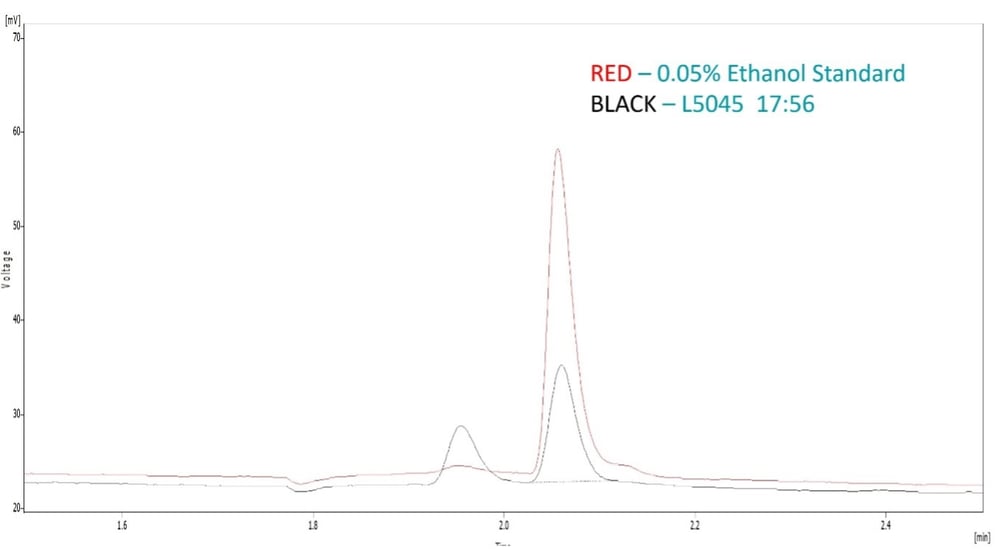
When you measure ethanol using gas chromatography, you are separating it from everything else in the sample and measuring it directly.
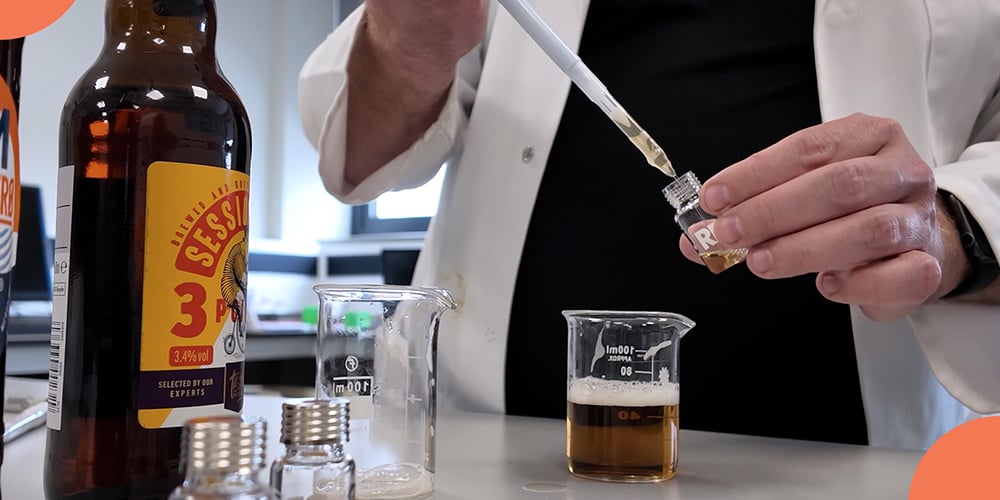
A small amount of beer or cider is injected into the system and heated so it turns into a vapour. That vapour is carried through a column, where different compounds move at different speeds. Ethanol moves through quickly and separates cleanly from the rest of the sample.
As ethanol leaves the column, it is detected and measured. The size of that response relates directly to how much alcohol was in the original sample.
For ethanol analysis, this is usually done using flame ionisation detection, often shortened to GC-FID. This type of detector responds strongly to alcohol, which makes it a good fit for measuring ethanol.
The result is a clear measurement of alcohol content, without relying on indirect calculations or assumptions.
If you want to see this process step by step, the video below shows how ethanol analysis is carried out from sample injection through to the final result.
Using gas chromatography for ABV testing does not mean changing how you run your production. For most producers, it becomes another check alongside the measurements they already make.
Some use it during development, to see how fermentation is progressing or to understand how a new recipe behaves. Others run a test before packaging to confirm the final alcohol content. In some cases, it is used to investigate a change in flavour or strength that does not quite line up with expectations.
How often you test depends on what you are trying to learn. Some producers test every batch as part of routine quality control. Others use it more selectively, when they need a clear answer about alcohol content.
What matters is that the result is available quickly. There is no need to send samples away or wait days for an answer. That makes it easier to act on what the measurement is telling you, rather than finding out after the fact.
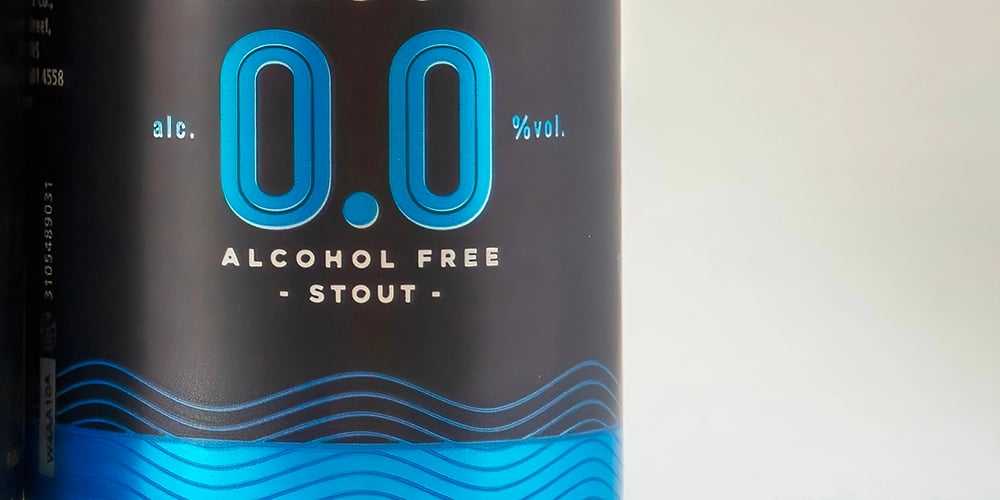
Low and alcohol-free products leave very little margin. When the target alcohol level is already close to zero, even small changes start to matter.
That makes alcohol measurement more difficult. Methods that work well at higher strengths can become less dependable when the actual ethanol content is very low. A result that looks fine on paper can hide small shifts that still affect the final product.
Gas chromatography avoids that problem by measuring ethanol directly. Instead of working from estimates, it shows exactly how much alcohol is present, even at low levels.
For producers making alcohol-free beer or cider, this changes how ABV testing fits into the process. It allows alcohol content to be checked during development, confirmed before packaging, and understood in the context of process changes.
If you want more detail, there are dedicated application notes covering ABV testing in alcohol-free beer and alcohol-free cider, which walk through the measurement in more depth.
For many producers, the main difference with ABV testing is where it happens.
When samples are sent to an external lab, the result comes back after the process has already moved on. That makes it harder to respond to small changes, especially when you are close to a target value or working on a new product.
Bringing ABV testing in-house means you get the result while decisions are still being made. Alcohol content can be checked while fermentation is still underway, before packaging, or as soon as something does not look quite right.
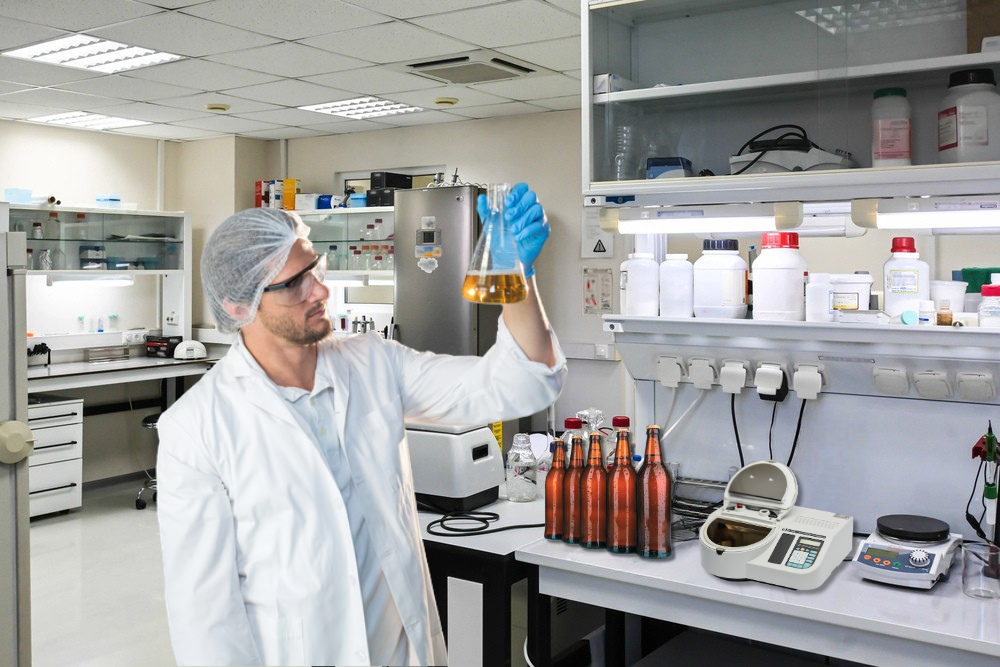
This is where smaller gas chromatography systems come into use. Systems like the 200 Series GC from Ellutia are designed to sit in small lab spaces and support routine ethanol measurement without turning testing into a specialist task.
The video above shows how ethanol analysis is carried out using gas chromatography, from sample injection through to the final result.
ABV application notes for beer, cider, alcohol-free beer, and alcohol-free cider go into more detail on how the measurement is applied in each case.
The brewing buyers guide shows where ABV testing sits alongside other routine measurements used during production.
Knowing your alcohol content clearly makes it easier to control flavour, consistency, and decisions from batch to batch.
Discover the essential role of testing in beer production and how it ensures quality control throughout the process. Testing plays a crucial role in...
When you brew beer or cider, you’re not just creating flavour you’re producing ethanol. But how do you know if the ABV on your label is actually...
When you brew beer or cider, you’re not just creating flavour, you’re also producing ethanol. And if your label says “alcohol-free,” even a tiny...