Why Terpene Testing in Cannabis Is More Important Than You Might Think
Most people associate cannabis with THC and CBD. But if you’ve ever wondered why one strain lifts you up while another winds you down, the answer...
4 min read
Ellutia Mar 11, 2026 10:18:24 AM
For years, the cannabis industry has focused heavily on one number: THC percentage.
Growers advertise it. Dispensaries highlight it. Consumers often use it as the main way to compare products.
But THC percentage rarely tells the full story.
Two cannabis products can contain almost identical THC levels while delivering completely different aromas, flavours, and effects. One might feel relaxing and calming, while another feels uplifting and energetic.
The difference usually comes down to something else entirely: terpenes.
Terpenes are the compounds responsible for the distinctive aroma and flavour of cannabis. More importantly, they play a key role in shaping the overall experience when cannabis is consumed.
This is why terpene profiling is becoming increasingly important for growers, labs, and dispensaries alike. Understanding the terpene profile of a cannabis product reveals information that THC percentage alone cannot.
In this article, we will look at:
What cannabis terpenes are
Why terpene profiles matter more than THC numbers
What a terpene profile actually looks like
How terpene analysis works
How growers and dispensaries use terpene data
Terpenes are naturally occurring compounds produced by many plants. They are responsible for the aromas and flavours found throughout the natural world.
In cannabis, terpenes create the wide range of scents people associate with different strains.
Some common examples include:
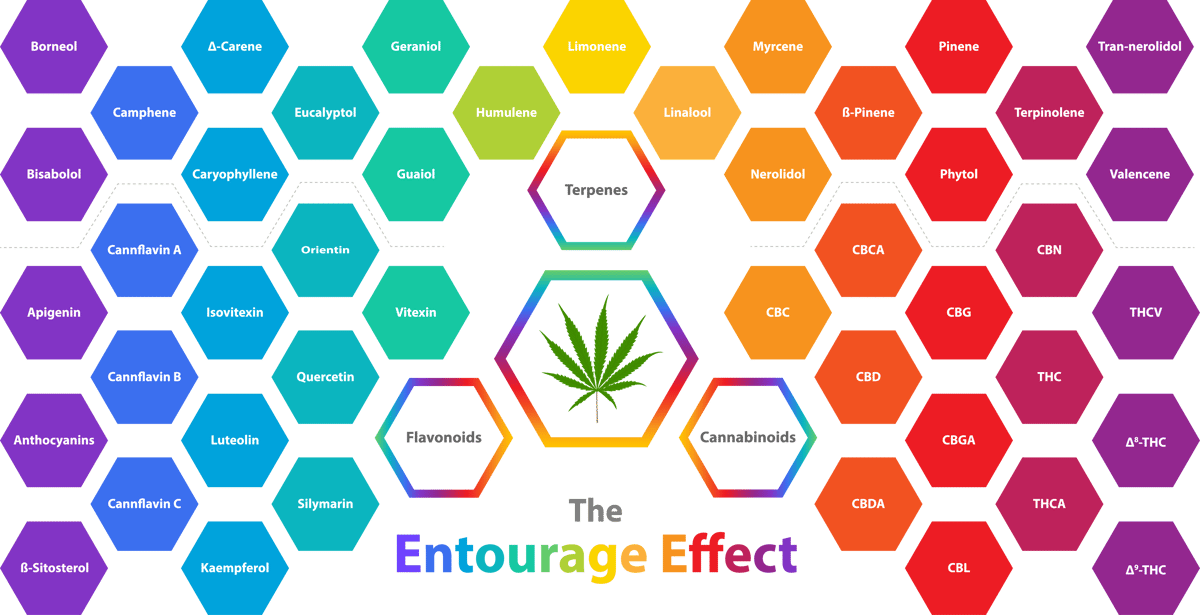
These compounds do more than produce aroma. Terpenes interact with cannabinoids such as THC and CBD and influence the effects of cannabis.
This interaction is often described as the entourage effect.
The idea is that cannabinoids and terpenes work together to shape how cannabis feels when consumed. A particular combination of compounds can influence whether the experience feels relaxing, uplifting, or balanced.
This is why two strains with the same THC level can feel very different.
The cannabis market has historically relied on THC percentage as a simple indicator of potency.
While THC is an important compound, it does not fully explain how cannabis will affect the user.
For example, two products may both contain 20% THC. On paper they appear identical. In reality, they can produce very different experiences depending on their terpene composition.
A strain high in myrcene and linalool may feel calming and relaxing.
Another strain with high levels of limonene and pinene may feel more energising or uplifting.
Without terpene data, these differences are difficult to understand or explain.
As consumers become more informed, many are starting to look beyond THC numbers. They want to know:
Terpene profiling provides these answers.
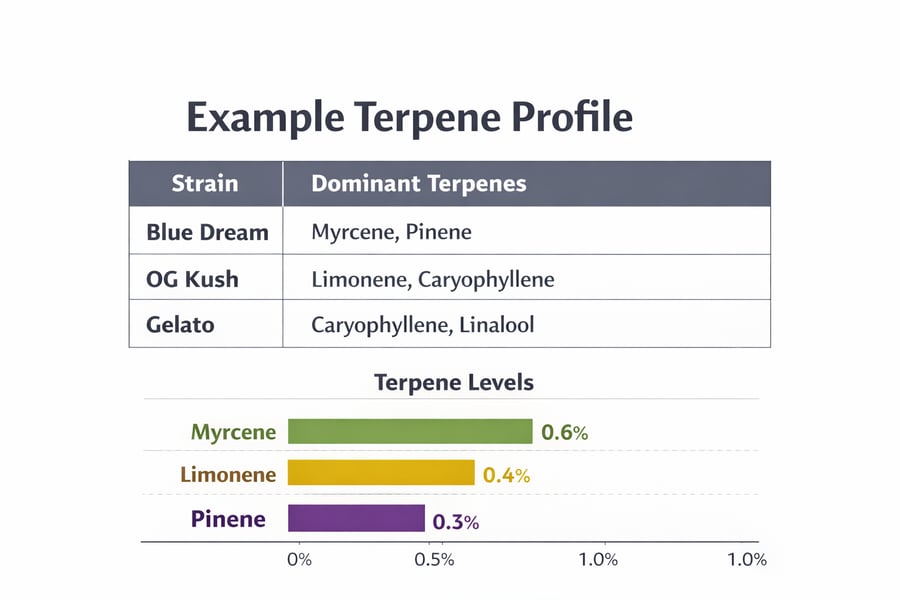
A terpene profile shows which terpenes are present in a cannabis sample and how much of each compound is present.
Rather than a single number like THC percentage, terpene analysis produces a multi-compound profile.
For example:
The relative concentrations of these compounds create the distinctive characteristics of each strain.
This chemical profile can be used to:
• verify strain identity
• maintain product consistency
• understand flavour and aroma characteristics
• predict likely consumer experience
For growers and producers, this information becomes extremely valuable over time.
Terpene analysis is most commonly performed using gas chromatography (GC).
Gas chromatography is well suited for analysing volatile compounds such as terpenes. These compounds vaporise easily and can be separated effectively using chromatographic techniques.
In a typical analysis process:
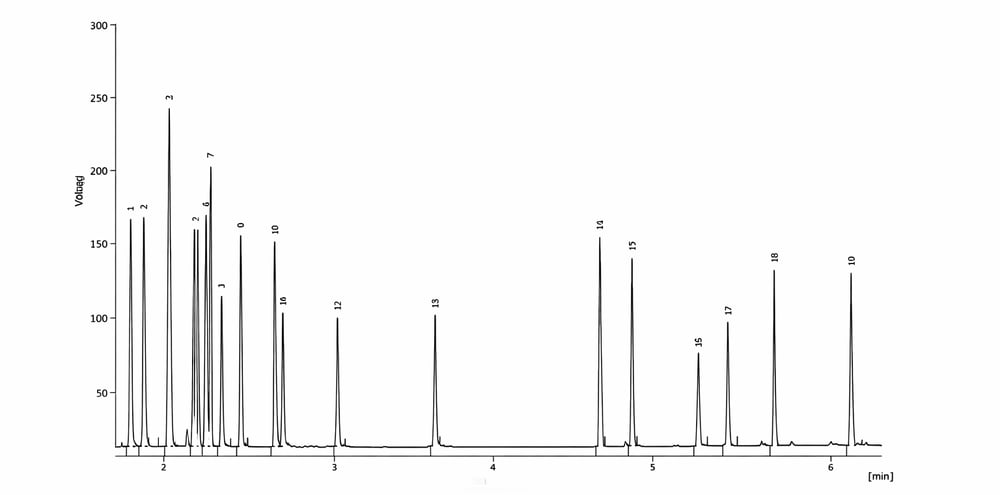
The result is a chromatogram showing the presence and concentration of individual terpenes.
Example chromatogram showing individual terpene compounds separated during GC analysis.
From this data, laboratories can generate a complete terpene profile showing exactly how much of each compound is present.
Systems such as the Ellutia 200 Series Gas Chromatograph are commonly used for this type of analysis, providing a straightforward platform for separating and quantifying terpene compounds.
The key objective of terpene analysis is simple: produce clear, reliable chemical data that describes the aroma and flavour profile of the product.
For growers, terpene profiling provides insight into how cultivation practices influence the chemical profile of the plant.
Small changes in environmental conditions can affect terpene production.
These factors include:
• lighting conditions
• temperature
• nutrient balance
• harvest timing
• drying and curing practices
By analysing terpene profiles over multiple harvests, growers can identify which cultivation conditions produce the most desirable results.
This allows them to:
• refine cultivation techniques
• increase flavour consistency
• optimise harvest timing
• maintain strain identity
Over time, terpene data becomes a valuable record of how a crop performs.
Dispensaries are increasingly using terpene information to guide product recommendations.
Rather than focusing only on THC numbers, dispensary staff can explain how terpene profiles influence aroma and likely effects.
For example:
A product high in myrcene and linalool may be recommended for customers seeking relaxation.
A product rich in limonene and pinene may be suggested for a more uplifting experience.
This approach shifts the conversation from potency to experience.
Providing terpene data also helps build trust with customers. When people understand what they are buying and why it behaves a certain way, they are more confident in their purchase.
For retailers, this can strengthen brand credibility and customer loyalty.
Terpene analysis was once considered an additional or optional test.
Today it is becoming a routine part of cannabis quality assessment.
There are several reasons for this shift.
First, consumers are becoming more knowledgeable about cannabis chemistry. Many now recognise that flavour, aroma, and overall experience are closely linked to terpene composition.
Second, producers want ways to differentiate their products beyond THC percentage.
And third, terpene profiling helps maintain consistency across batches, something that becomes increasingly important as cannabis markets mature.
As the industry evolves, chemical profiling is playing a larger role in how cannabis is produced, tested, and sold.
If you would like a deeper introduction to terpene analysis, we have created a short guide covering:
• the most important cannabis terpenes
• how terpene profiles influence flavour and effect
• example terpene profile charts
• how gas chromatography measures terpenes
• what growers should track when analysing terpene data
Download the Cannabis Terpene Profiling Guide to learn more about how terpene data can be used across cultivation, testing, and retail.
The cannabis industry has long relied on THC percentage as a shorthand for quality and potency.
But that number only tells part of the story.
Terpenes are responsible for the aromas, flavours, and many of the nuanced effects that define the cannabis experience. Understanding terpene profiles gives growers, labs, and retailers a much clearer picture of what their products actually contain.
As terpene analysis becomes more widely adopted, it is likely to become a standard part of cannabis testing and product development.
For producers and retailers looking to better understand their products, terpene profiling offers a practical and increasingly valuable source of insight.
Most people associate cannabis with THC and CBD. But if you’ve ever wondered why one strain lifts you up while another winds you down, the answer...
Nitrosamines are among the most tightly regulated contaminants in pharmaceuticals, food, and tobacco, yet in cannabis, they are barely on the...
When patients rely on medicinal cannabis to help manage conditions like epilepsy, chronic pain, or multiple sclerosis, potency accuracy isn’t...