
1 min read
Struggling with Inconsistent GC Results? It Could Be Your Flow
Getting consistent, reliable results in GC often means juggling a lot of moving parts. You carefully optimise columns, detectors, and ovens—but one...
Most GC troubleshooting starts in the wrong place.
When results go inconsistent, the column gets questioned first. Then the sample prep. Then the temperature programme. Carrier gas flow tends to come later, if it comes up at all. That is a problem, because flow affects every single separation that runs.
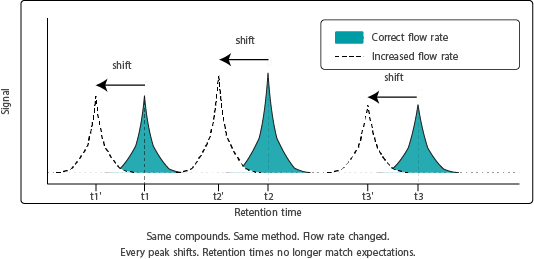
Carrier gas flow determines how long a compound spends on the column. Change the flow and you change the retention time. Change it enough and peaks shift, resolution suffers, and a method that was reproducible stops being reproducible.
It is not just column flow either. Detector gases affect sensitivity and baseline stability. Split ratios depend on the relationship between column flow and split flow. If any of those values drift, the effects show up in your data, but they rarely announce what caused them.
This is what makes flow problems genuinely difficult to catch: they are quiet. A partially blocked line, a worn seal, a regulator that has drifted over months. None of these fail visibly. They introduce small inconsistencies that are easy to misread as something else.
An analyst can spend a morning suspecting the column, revisiting sample preparation, or checking the temperature programme, when the actual cause is a flow rate that is no longer what the instrument claims it is.
Modern GCs are more stable than older pressure-regulated systems, but that does not mean the displayed flow value is correct. The number on the screen is what the instrument was told to deliver. What is actually reaching the column can be a different number entirely, and without a direct measurement there is no way to know which situation you are in.
Components age, fittings loosen, and seals wear gradually enough that no single run looks obviously wrong. The drift is slow and quiet, which is exactly what makes it easy to miss. Measuring flow directly takes seconds with the right tool, and it removes flow as a variable from your troubleshooting completely.
If a method fails an out-of-specification check, being able to demonstrate that flow was verified removes one potential cause from the investigation immediately. If it cannot be demonstrated, that question stays open for longer than it needs to.
A direct flow measurement is one of the simplest preventive maintenance steps a GC lab can take. It does not require the instrument to be taken offline. It does not require specialist knowledge. It takes a few seconds per point, and it gives you a number you either trust or act on.
Run these checks regularly:
✅ Column flow: Verify that what the instrument reports matches what is actually reaching the column. Even a small discrepancy compounds across a run sequence.
✅ Detector gases: FID performance in particular is sensitive to the ratio of hydrogen and air supply. A shift in either affects sensitivity and baseline, and it is easily missed until results start looking off.
✅ Split flow: The split ratio is set by the relationship between column flow and split vent flow. If the split vent is partially restricted, the ratio changes without any indication on the instrument display.
✅ Total flow into the inlet: For split/splitless inlets, total flow affects inlet dynamics including backflash risk. Verifying this directly is a fast check on inlet health.
None of these require extended downtime. A systematic check across all flow points on a GC takes minutes and gives a clear picture of instrument condition.
For laboratories working to a quality standard, every flow measurement is evidence. A properly qualified GC with documented calibration records gives you a defensible instrument. A traceable flowmeter reading goes further: it independently confirms that what the instrument was set to deliver was actually being delivered at the time your results were produced.
In regulated environments, that independent data point has real value. During a routine audit it demonstrates due diligence beyond standard instrument qualification. During a deviation investigation or an out-of-specification review, it removes flow as an open variable and gives the investigation somewhere solid to start from.
A single logged reading per flow point, taken at regular intervals, is all it takes. The overhead is minimal and the record it produces is one you can stand behind when the question gets asked.
For most analysts, the barrier to regular flow measurement is practical rather than conceptual. The value of the check is understood. The friction is in adding another step to a workflow that already has plenty of them, which means the tools that make it stick are the ones that remove that friction rather than add to it. A handheld meter that measures quickly, covers all the gases your lab uses, and lives at the bench rather than in a calibration cupboard is one that actually gets used.
The checks themselves follow a natural pattern: at the start of a run sequence, when a new column is installed, after any maintenance involving gas lines, and after a carrier gas cylinder change. Those are the moments when flow is most likely to have shifted, either suddenly or gradually, and verifying it at each of those points means it rarely has time to affect your data.
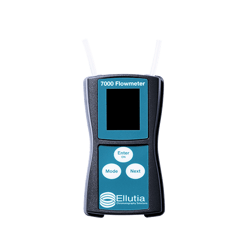
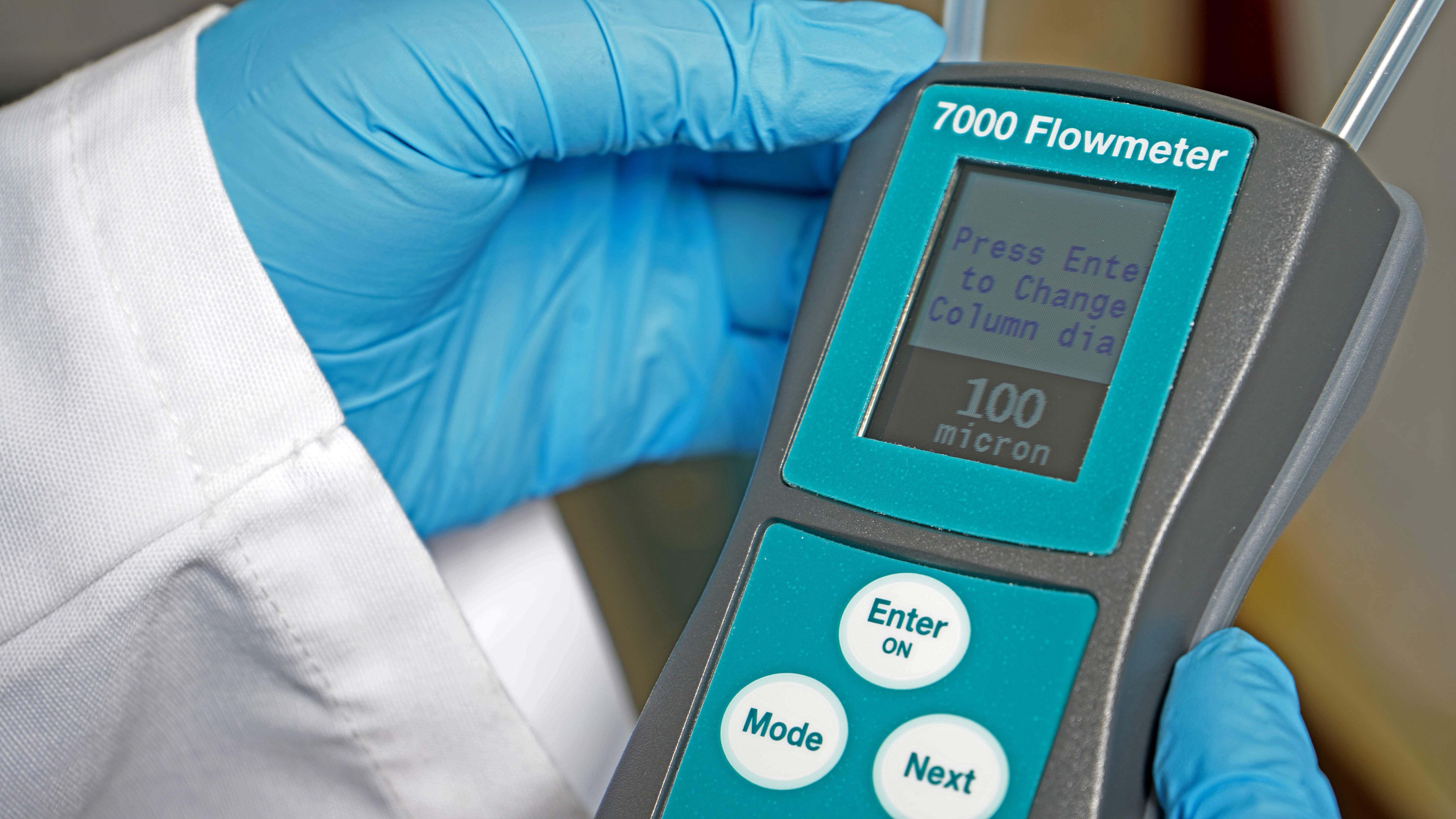
The 7000 GC Flowmeter was built specifically for this kind of work. It is a pocket-sized, UK-built instrument that measures eight common GC gases, calculates linear velocity directly from your column dimensions, and handles split flow measurement without additional setup.
Its calibration is traceable to UKAS standards, so every reading is one you can record and stand behind. It is designed to be kept at the bench, not stored away, which is what makes regular measurement practical rather than occasional.
Product Description
Most GC labs need to measure several different carrier gases. The 7000 does all eight, from Helium to Hydrogen, in a single pocket-sized instrument. No adapters. No switching between devices. One calibrated unit, rechargeable, accurate to ±0.4 ml/min.
1 min read
Getting consistent, reliable results in GC often means juggling a lot of moving parts. You carefully optimise columns, detectors, and ovens—but one...
1 min read
When patients rely on medicinal cannabis to help manage conditions like epilepsy, chronic pain, or multiple sclerosis, potency accuracy isn’t...
1 min read
At Ellutia, we understand the critical role Electron Capture Detectors (ECDs) play in laboratories worldwide. These detectors are indispensable in...